What Is the Difference Between a MOSFET and a Relay?
2026-04-26
147
Catalog
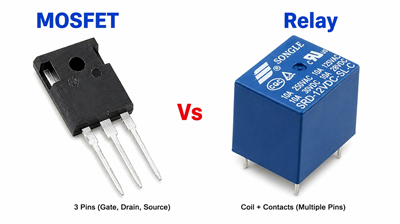
Figure 1. MOSFET vs Relay Comparison
What Is a Relay and How Does It Work?
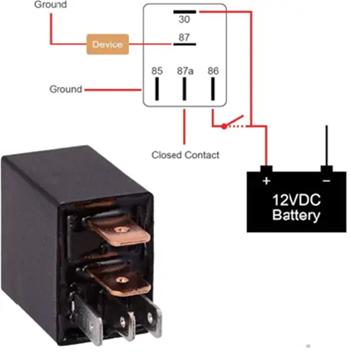
Figure 2. How a Relay Is Connected in a Circuit
A relay is an electromechanical switch that allows a low-power signal to control a higher-power circuit. It works using a coil that creates a magnetic field when energized, pulling an armature to open or close the contacts. Relays typically have normally open (NO) and normally closed (NC) contacts. When the coil is powered, the NO contact closes and the NC contact opens. When power is removed, a spring returns the contacts to their original state. This design allows relays to safely control high-voltage or high-current devices, while providing electrical isolation between the control and load circuits.
What Is a MOSFET and How Does It Work?
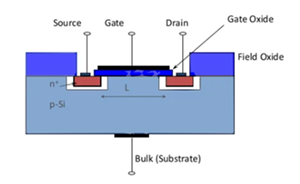
Figure 3. MOSFET Internal Structure Diagram
A MOSFET is a semiconductor switch that controls current using voltage. It has three terminals: gate, drain, and source. The gate is insulated, so it requires very little current to operate. When voltage is applied to the gate, it creates a channel that allows current to flow between the drain and source. When the voltage is removed, the channel disappears, stopping the current. Since MOSFETs have no moving parts, they switch very fast, operate silently, and are highly efficient. They are widely used in low-voltage, DC, and high-speed electronic circuits.
MOSFET vs Relay: Key Differences
|
Feature |
MOSFET |
Relay |
|
Type |
Electronic
(semiconductor) |
Mechanical
(electromagnetic) |
|
How It Works |
Uses voltage to
control current flow |
Uses a coil to move
contacts |
|
Switching Speed |
Very fast
(microseconds) |
Slow (milliseconds) |
|
Moving Parts |
None |
Yes (contacts move) |
|
Lifespan |
Very long |
Limited due to wear |
|
Noise |
Silent |
Clicking sound |
|
Power Consumption |
Low
(voltage-controlled) |
Higher (coil needs
power) |
|
Electrical Isolation |
No full isolation |
Full isolation
between control and load |
|
Load Type |
Mostly DC |
AC and DC |
|
Size |
Small and compact |
Bigger and bulky |
|
Heat |
Can generate heat
under load |
Less heat at contacts |
|
Reliability |
High (no wear) |
Can degrade over time |
|
Cost |
Usually low to
moderate |
Can be higher
depending on type |
MOSFET vs Relay Applications
Relay Applications:
• Power supplies and DC-DC converters
High-frequency switching, low conduction loss, improved efficiency
• Battery management systems (BMS)
Charge and discharge control, protection switching, low Rds(on) characteristics
• Motor drivers (PWM control)
Variable speed control, fast switching response, precise torque regulation
• LED drivers and lighting systems
Dimming control, stable current regulation, high switching efficiency
• High-speed switching circuits
Nanosecond-level response, no mechanical delay, suitable for digital and power control
MOSFET Applications:
• High-voltage isolation systems
Physical contact isolation, clear air gap, enhanced safety in power circuits
• Automotive load control (headlights, fuel pumps, starters)
High current handling, robust switching for harsh environments
• Backup power and ATS systems
Reliable source switching, strong surge current tolerance
• Industrial control panels (motors, compressors)
Heavy load switching, electrical isolation between control and power
• HVAC and home appliances
MOSFET vs Relay: Which Is Better for Your Application?
Choosing between a MOSFET and a relay depends on your specific needs. Both devices can control electrical circuits, but they are designed for different types of applications.
A Relay is the better choice when your system involves high voltage or high current, especially with AC power. Relay is also ideal when electrical isolation is required, meaning the control circuit must be completely separated from the load for safety. Relays are commonly used in appliances, industrial systems, and automotive applications where switching large loads is necessary and speed is not needed.
A MOSFET is more suitable for low-voltage and DC circuits that require fast and efficient switching. Since it has no moving parts, it operates silently and can switch very quickly, making it perfect for modern electronics, such as microcontroller projects, power supplies, battery systems, and robotics. MOSFETs are also preferred when space is limited and energy efficiency is required.
MOSFET vs Relay: When Should You Use
You should use a MOSFET or relay based on the actual situation in your system, not just general features.
Use a relay when working with actual power systems such as home appliances, industrial machines, or automotive circuits. These systems usually involve AC power or high voltage, where safety and isolation are required. Relays are also better when you only need simple ON/OFF control and switching does not happen usually.
Use a MOSFET in electronic and digital systems where switching happens frequently and speed matters. This includes microcontroller circuits, battery-powered devices, power supplies, and robotics. MOSFETs are also a better choice when you need high efficiency, low heat, and compact design.
MOSFET vs Relay: Electrical Isolation
|
Feature |
MOSFET |
Relay |
|
Isolation Type |
No built-in isolation |
Full galvanic isolation |
|
Control–Load Connection |
Shared electrical path |
Physically separated |
|
Safety Level |
Lower (needs careful design) |
Higher (safer for high voltage) |
|
Extra Components Needed |
Opto-isolator or driver (if isolation required) |
Usually none |
|
High Voltage Protection |
Limited |
Strong protection |
|
Best Use Case |
Low-voltage DC systems |
High-voltage, AC, and safety-critical systems |
MOSFET Gate Drive vs Relay Coil Drive
|
Drive Requirement |
MOSFET |
Relay |
Description |
|
Control Signal |
Gate voltage |
Coil current |
MOSFET uses voltage to control switching, while relay needs current to energize the coil |
|
MCU Drive |
Direct (logic-level) |
Needs driver transistor |
MOSFET can connect directly to microcontrollers; relay often needs extra driver circuit |
|
Protection |
Gate resistor / TVS |
Flyback diode |
MOSFET needs voltage protection; relay needs diode to prevent voltage spikes |
|
Power Use |
Very low |
Continuous consumption |
MOSFET uses minimal power; relay consumes power as long as it stays ON |
MOSFET vs Relay: Cost Comparison
|
Device Type |
Typical Price |
Description |
|
Small MOSFET |
$0.05 – $0.50 |
Low-cost, ideal for low-power and high-volume electronic circuits |
|
Power MOSFET |
$0.30 – $3 |
Used for higher current applications; may need heatsink or driver |
|
Automotive Relay |
$1.5 – $5 |
Common in vehicles; reliable for switching moderate to high loads |
|
Power Relay |
$2 – $10+ |
Designed for high voltage/current; simple control and strong isolation |
Common Mistakes When Choosing Between MOSFET and Relay
Using a MOSFET for high-voltage AC loads - MOSFETs are mainly for DC. Using them directly on AC without proper design can cause failure.
Ignoring electrical isolation needs - If your system needs isolation for safety, a relay is often the better choice.
Choosing the wrong voltage or current rating - Using a device with lower ratings than required can lead to overheating or damage.
Not driving the MOSFET gate properly - A weak or incorrect gate voltage can cause the MOSFET to heat up and not switch fully.
Using a relay for high-speed switching - Relays are slow and can wear out quickly if switched too often.
Forgetting relay coil power consumption - Relays need constant power to stay ON, which can waste energy in long-running systems.
Ignoring heat management in MOSFETs - Without proper cooling or design, MOSFETs can overheat under load.
Not considering lifespan - Relays wear out over time, especially in frequent switching applications.
Incorrect wiring of contacts or terminals - Wrong connections can cause the circuit to fail or behave unexpectedly.
 ABOUT US
Customer satisfaction every time. Mutual trust and common interests.
ABOUT US
Customer satisfaction every time. Mutual trust and common interests.
function test. The highest cost-effective products and the best service is our eternal commitment.
Hot Article
- LM358 Dual Operational Amplifier Comprehensive Guide: Pinouts, Circuit Diagrams, Equivalents, Useful Examples
- Are CR2032 and CR2016 Interchangeable?
- Understanding the Differences ESP32 and ESP32-S3 Technical and Performance Analysis
- Choosing the Right Battery: A Guide to AG4, LR626, LR66, 177/376/377, SR626, and SR626SW Equivalents
- NPN vs. PNP: What's the Difference?
- BC547 Transistor Basics: Pinout, Application Circuits, Alternative/Complementary Models
- esp32 vs stm32: which microcontroller is better for you?
- What Is a MOSFET and How It Works?
- Electrical Relay Basic: Working Operation, Types and Uses
- PNP Transistors: Structure, Working Principle and Application
 Latching vs Non-Latching Relay: Which Is Better?
2026-04-27
 Class X vs Class Y Capacitors: What’s the Difference?
2026-04-25
Frequently Asked Questions [FAQ]
1. Can a MOSFET replace a relay in all applications?
No. A MOSFET works well for DC and fast switching, but it cannot fully replace a relay in high-voltage AC or isolation-required systems.
2. Which is cheaper, MOSFET or relay?
MOSFETs are usually cheaper in simple circuits, but relays can be more cost-effective for high-power switching.
3. Do MOSFETs need a heatsink?
Sometimes. If the current is high, a MOSFET can generate heat and may need a heatsink for safe operation.
4. Why do relays make a clicking sound?
Relays use moving contacts. The clicking sound comes from the armature physically moving when switching.
5. What happens if a MOSFET fails?
A MOSFET usually fails shorted, meaning it may stay permanently ON and allow current to pass.
Hot Part Number
 C0402X6S0G331K020BC
 GRT31CR61E475KE01L
 GR442QR73D221KW01L
 GRM0335C1E2R7CA01J
- GRM033R71E332KA12J
 EMK063B7682KP-F
 CS1206KKX7RYBB473
 LD02YC181KAB2A
 12105C154KHT1A
 1812GA221JAT9A
- T495X336M025AHE200
- DSI30-12A
- SI6975DQ-T1-E3
- SL38160AZC-18AHT
- MAX3232EEUE+T
- MT48LC4M16A2P-6:G
- MAX6356TWUT+T
- LCMXO1200C-5FTN256C
- FP15R12KT3
- LTC3638IMSE#PBF
- T491A474M025AT7622
- TMS320C6455BCTZ7
- T491D106K035AH2478
- T491X226M035ATAUTO
- T491C475M035ZTAU00
- ST7FLITE02Y0M6
- LT4256-1IS8#PBF
- LM2594MX-5.0/NOPB
- GE212JIYJ23JB
- GE28F256L18B
- HD64F2329BVTE25
- ICS93722CF
- IS61LPS51236A-200TQL
- KSZ8841PMQL
- MT41K256M16TW-107IT:P
- MT49H16M18CFM-5IT
- P51XAG37KBBD
- ST19NP18ER28PVMX
- STPR1020CTW
- AK4311AVM-E2
- LR36A11A
- NAT7210BPD
- IH5047MJE/883B
- MAX232MJE/883
- MM3Z2V4S
- GS8662Q18BGD-300
- AD8876ACPZ
- WL2851E33-5/TR
- BM05B-PASS-TF