Latching vs Non-Latching Relay: Which Is Better?
2026-04-27
57
Catalog
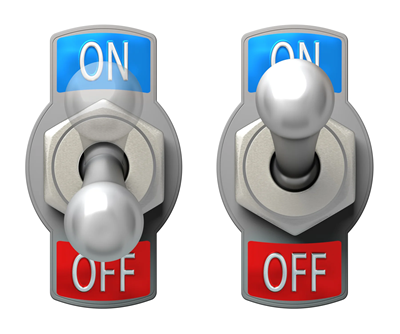
Figure 1. Latching vs Non-Latching Relay
What Is a Relay?
A relay is an electrically operated switch that allows a small electrical signal to control a bigger and more powerful circuit safely. It works by sending a small current to a coil, which creates a magnetic force that moves internal contacts to open or close another circuit. This allows simple devices, like a microcontroller or switch, to control higher-power devices such as motors, lights, or appliances without handling high voltage directly. One feature of a relay is electrical isolation, which keeps the control side separate from the load side and helps protect sensitive parts from damage. Relays usually have normally open (NO) or normally closed (NC) contacts, which define whether the circuit is off or on by default.
To understand how relays work in actual applications, let’s look at the two main types: latching relays and non-latching relays, and how each one works.
What Is a Latching Relay and How It Works?
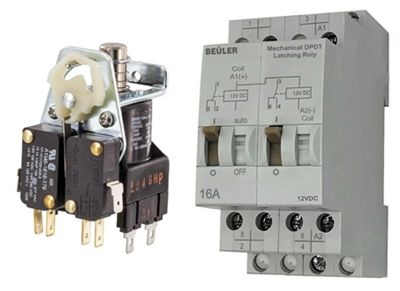
Figure 2. Latching Relay Examples
A latching relay is a relay that stays ON or OFF even after you remove the power. It “remembers” its last state, so you don’t need continuous power to keep it in position. This is why it’s also called a bistable relay.
Here’s how it works: you send a short electrical pulse to the relay coil, and it switches either ON or OFF. Inside, a mechanical latch or a small magnet holds the contacts in place. Once it switches, it stays there even when the power is gone. To change the state again, you simply send another pulse.
There are two common types. A single-coil latching relay uses one coil and changes state depending on the direction of the current. A dual-coil latching relay uses two coils, one coil is used to turn it ON, and the other is used to turn it OFF. Dual-coil designs are easier to control and are more common in practical circuits. You’ll usually use a latching relay when you want to save energy or keep a setting even during power loss.
However, it also has a few things to consider. The control circuit can be slightly more complex, and you need to make sure the correct signal is sent to change its state.
What Is a Non-Latching Relay How It Works?
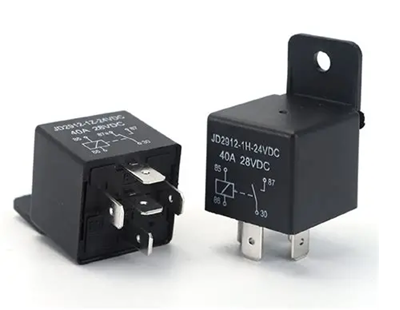
Figure 3. Automotive Non-Latching Relay
A non-latching relay is a relay that only stays ON while you are supplying power. Once the power is removed, it automatically returns to its original state. It does not store or remember its last position.
Here’s how it works: when you apply power to the coil, it pulls the internal contacts and changes the circuit state. But unlike a latching relay, there is no locking mechanism inside. So when the power stops, the magnetic force disappears, and a built-in spring pushes the contacts back to their default position.
You’ll notice it always follows its default behavior. A normally open (NO) relay stays OFF until you power it, while a normally closed (NC) relay stays ON until you activate it.
You’ll usually use a non-latching relay when the device only needs to run while power is present, like in motors, fans, or control systems that should stop immediately when power is cut. It’s simple to use, but it does need continuous power if you want it to stay active.
Latching vs Non-Latching Relay: Main Differences
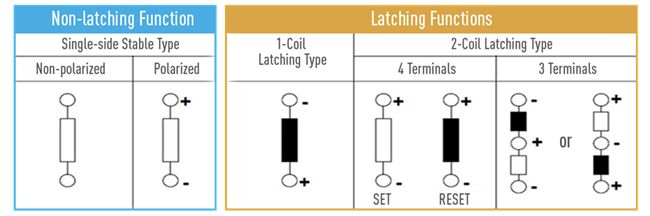
Figure 4. Latching vs Non-Latching Relay Functions
Now that you’ve seen how both work, here’s the simple comparison between them so you can choose faster.
A latching relay keeps its last state even when power is removed, while a non-latching relay only stays active while power is applied. This one difference affects how they behave, how much power they use, and where you should use them. Here’s a clear comparison:
State Memory
- A latching relay remembers its last ON or OFF state.
- A non-latching relay always returns to its default state.
Power Requirement
- A latching relay only needs power when switching.
- A non-latching relay needs continuous power to stay ON.
Energy Efficiency
- Latching relays are more energy-efficient, especially for battery systems.
- Non-latching relays consume more power over time.
Control Method
- Latching relays need pulse signals (sometimes separate ON/OFF control).
- Non-latching relays are simpler, just apply power to activate.
Fail Behavior
- Latching relays stay in their last state during power loss.
- Non-latching relays reset when power is lost (safer for some systems).
Typical Applications
- Latching relays are used in smart devices, memory circuits, and low-power systems.
- Non-latching relays are used in motors, appliances, and systems that must stop when power is cut.
Advantages and Disadvantages of Latching Relays & Non-Latching Relays
Latching Relay
Advantages:
• Uses very low power since it only needs power when switching
• Remembers its last state, even during power loss
• Great for battery-powered and energy-saving systems
• Reduces heat and power waste over time
Disadvantages:
• Control can be a bit more complex (pulse or dual-coil control)
• You need to track its current state in your system
• Not ideal if you want the system to reset automatically after power loss
Non-Latching Relay
Advantages:
• Simple to use, just apply power to activate
• Predictable behavior (always returns to default state)
• Better for fail-safe systems where OFF state is safer
• Easier to design and control in most circuits
Disadvantages
• Needs continuous power to stay ON
• Consumes more energy over time
• Can generate more heat in long operation
When Should You Use a Non-Latching and Latching Relay?
Choosing between a latching and non-latching relay depends on how you want your system to behave during and after power is applied.
You should use a latching relay when you want to save power or keep the last state even after power is removed. It is a good choice for battery-powered devices, smart home switches, and systems that need to remember whether they were ON or OFF. Since it only needs power when switching, it helps reduce energy use over time. It is also useful in situations where you want the device to continue working in its last state even after a power interruption.
On the other hand, you should use a non-latching relay when you want the system to operate only while power is present. It is used in motors, fans, appliances, and industrial control systems where the device should stop immediately once power is removed. This makes it a safer option for many applications as it automatically returns to its default state. It is also easier to control since you only need to apply power to activate it.
How to Choose Between Latching and Non-Latching Relays
Choosing the right relay is not complicated if you focus on how your system needs to behave.
First, think about power usage. If your project runs on a battery or you want to save energy, a latching relay is the better choice as it only uses power when switching. If power consumption is not a concern, a non-latching relay can work just fine.
Next, consider what should happen during a power loss. If you want the device to stay in its last state, go with a latching relay. If you want the system to turn OFF or reset automatically for safety, a non-latching relay is the safer option.
You should also look at control complexity. Latching relays may need pulse signals or separate ON/OFF control, which makes the design slightly more complex. Non-latching relays are simpler since you just apply power to keep them active.
Another factor is the type of application. For smart devices, memory-based systems, or energy-efficient designs, latching relays are used. For motors, appliances, and industrial systems that should only run when powered, non-latching relays are more suitable.
Wiring Differences Between Latching and Non-Latching Relays
The wiring difference mainly comes from how each relay is controlled.
A non-latching relay is simple to wire. You connect the coil to a power source through a switch or control signal. When power is applied, the relay activates. When power is removed, it turns off. The load is connected through the COM, NO, or NC contacts, depending on how you want the circuit to behave. This setup is straightforward since you only need one control line to keep it ON.
A latching relay is wired differently as it needs a signal to switch ON and another to switch OFF. In a dual-coil latching relay, you have two separate inputs, one coil for SET (turn ON) and another for RESET (turn OFF). Each coil is triggered by a short pulse. In a single-coil latching relay, the wiring depends on polarity, meaning the direction of the current determines whether it turns ON or OFF. This makes the wiring slightly more complex compared to a non-latching relay.
Common Mistakes When Using Relays
Here are the most common mistakes you should avoid when using relays:
Choosing the wrong relay type - Using a latching relay instead of a non-latching relay (or vice versa) can cause the system to behave incorrectly.
Incorrect wiring (NO and NC confusion) - Mixing up normally open (NO) and normally closed (NC) contacts can make the device turn ON or OFF at the wrong time.
Using the wrong relay rating - If the relay is not rated for your voltage or current, the contacts can overheat, burn, or fail.
No flyback diode on the coil - Skipping the diode can cause voltage spikes that may damage your microcontroller or control circuit.
Keeping non-latching relays ON too long - Continuous power can lead to higher energy use and extra heat.
Ignoring proper isolation and protection - This can cause noise issues or damage sensitive electronic components.
Troubleshooting Relay Issues
If your relay is not working properly, here are some common issues and how you can check them:
Relay not clicking (no switching sound) - Check if the coil is getting power. Use a multimeter to verify voltage. If there is no voltage, the problem may be in the control circuit or wiring.
Relay clicks but does not switch the load - The contacts may be damaged or worn out. Also check if the load wiring is connected correctly to COM, NO, or NC.
Relay stuck ON or OFF - This can happen due to welded contacts or mechanical failure. In latching relays, also check if the correct pulse signal is being sent.
Intermittent operation (works sometimes) - Loose wires, poor connections, or unstable power supply can cause this issue. Check all terminals and connections.
Overheating relay - This usually means the relay is overloaded or drawing too much current. Make sure the relay rating matches your load.
Control circuit not responding properly - If you are using a microcontroller, check for missing components like a flyback diode, or incorrect signal levels.
Conclusion
Latching and non-latching relays may look similar, but they behave very differently. A latching relay is best when you need to save power or keep the last state, while a non-latching relay is better for simple control and automatic reset. By understanding how each type works, along with their advantages, wiring, and common issues, you can choose the right relay for your project. In the end, selecting the correct relay helps improve safety, performance, and reliability in your system.
 ABOUT US
Customer satisfaction every time. Mutual trust and common interests.
ABOUT US
Customer satisfaction every time. Mutual trust and common interests.
function test. The highest cost-effective products and the best service is our eternal commitment.
Hot Article
- LM358 Dual Operational Amplifier Comprehensive Guide: Pinouts, Circuit Diagrams, Equivalents, Useful Examples
- Are CR2032 and CR2016 Interchangeable?
- Understanding the Differences ESP32 and ESP32-S3 Technical and Performance Analysis
- Choosing the Right Battery: A Guide to AG4, LR626, LR66, 177/376/377, SR626, and SR626SW Equivalents
- NPN vs. PNP: What's the Difference?
- BC547 Transistor Basics: Pinout, Application Circuits, Alternative/Complementary Models
- esp32 vs stm32: which microcontroller is better for you?
- What Is a MOSFET and How It Works?
- Electrical Relay Basic: Working Operation, Types and Uses
- PNP Transistors: Structure, Working Principle and Application
 Types of Ceramic Capacitors and Their Uses
2026-04-27
 What Is the Difference Between a MOSFET and a Relay?
2026-04-26
Frequently Asked Questions [FAQ]
1. Why do non-latching relays need continuous power?
Because they rely on a magnetic field to hold contacts, which disappears when power is removed.
2. Which relay is better for battery-powered devices?
A latching relay is better since it reduces power consumption and extends battery life.
3. Are latching relays more expensive than non-latching relays?
Generally yes, due to their more complex internal design and control mechanism.
4. Can I replace a non-latching relay with a latching relay?
Only if your circuit supports pulse control and does not require automatic reset.
5. How do I know if my relay is faulty?
If it does not click, switch properly, or shows signs of overheating, it may be defective.
6. What should I check before installing a relay?
Check the voltage rating, current capacity, coil voltage, and correct wiring setup.
Hot Part Number
 CL05C271JB5NNNC
- CL21F104ZBANNNC
 C0603JB1C104K030BC
 C2012X8R1E224K125AE
 CC1206ZRY5V7BB225
 GCM0335C1E6R2DD03D
 GRM1886T1H9R0DD01D
 F920J226MAA
 IRFR9120TR
 SY87700ALZG
- EL5410CS
- IR3448MTRPBF
- VI-J20-MZ
- MCC310-16I01
- p080A2004
- VI-241-EX
- T491C106M016ZT7111Z330
- T491C106K025AH7280
- TPP 30-105-D
- MC100LVEP34DTR2G
- LTM4622EY#PBF
- DAMM15PZ
- STM32F411CCY6TR
- TMS320C6727BGDH350
- LTC1407IMSE-1#PBF
- LM2576S-5.0
- LM319MX/NOPB
- STM32F410RBT7TR
- MC74LCX08DTR2
- 215RS2BFA21H
- AD1991ASVZ
- DS1558D+
- IDT71321LA25J
- MAX550AEUA
- PW166-10TK
- SP3481EN
- STMPS2151S
- TL494MJB
- TNETV1055GDW
- XC3190A-3PQ160I
- RC5057MT
- WT200
- R96DFXL/R6657-14
- STAC927105
- H9CCNNN8GTMLAR-NTD
- AC48802CE3-CL
- LPC11U67J
- DSC1001BI2-022.1184T
- R5F3640DDFBR