What Is Co-Packaged Optics (CPO)? Overview, Benefits, and Applications
2026-04-23
3207
Catalog
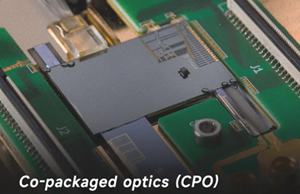
Figure 1. Co-Packaged Optics (CPO) Module Overview
What Is Co-Packaged Optics (CPO)?
Co-Packaged Optics (CPO) is a design where optical parts are placed near the chip inside a network device. Instead of using separate plug-in modules connected by electrical traces, the optical components are built into the same package as the chip. This setup shortens the distance that electrical signals need to travel. This is why, signals can move faster and lose less energy before being converted into light. CPO is mainly used in high-speed systems where large amounts of data must move quickly and efficiently.
Why CPO Matters for Modern Data Centers
Data centers today handle a huge amount of information. Every time we use cloud apps, watch videos, or store data online, the data center must send and receive signals quickly. Traditional designs use plug-in optical modules. These work well, but as speed increases, they need more power and create more heat. The longer electrical paths inside the device also make signals weaker before they are converted into light.
CPO helps solve these problems by placing the optical parts close to the chip. That is why, the electrical path is very short. This lowers power use and reduces heat. It also helps keep the signal strong and clear. With this setup, data centers can support higher data rates and handle more traffic without needing too much extra power. This makes systems more efficient and easier to scale as demand grows.
How Co-Packaged Optics Works
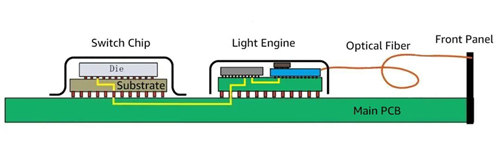
Figure 2. CPO Signal Flow Diagram
In a CPO system, the process starts at the main chip. The chip creates electrical signals that carry data. These signals move a very short distance to nearby optical components. The optical components change the electrical signals into light signals. This step is called conversion. Once the signal becomes light, it travels through optical fiber cables to another device.
At the receiving side, another optical component changes the light signal back into an electrical signal. The receiving chip then processes the data. Since the electrical path inside the device is short, less energy is lost. The signal stays strong before conversion. After that, light carries the data over longer distances with very low loss.
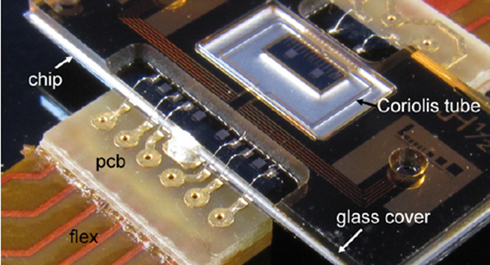
Figure 3. Co-Packaged Optics (CPO) Hardware Layout
CPO vs Pluggable Optics: What Is the Difference?
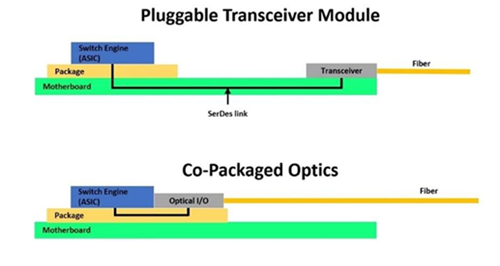
Figure 4. CPO vs Pluggable Optics Comparison Diagram
CPO and pluggable optics are two ways to connect optical communication in network systems, but they are built differently and work in different ways.
In pluggable optics, the optical module is a separate part that is inserted into the front panel of a device. The main chip sends electrical signals across the board to this module. The module then converts the signal into light and sends it through fiber cables. This design is easy to replace and widely used today.
In CPO, the optical parts are placed very close to the main chip inside the system. The electrical signals only travel a short distance before being converted into light. This reduces signal loss and lowers power use.
The main difference is the distance between the chip and the optical part. Pluggable optics use longer electrical paths, while CPO keeps everything close together.
Pluggable optics are easier to maintain and replace. However, they use more power and may limit speed as data rates increase. CPO improves performance and efficiency, but it is harder to repair and still developing.
|
Feature |
Co-Packaged
Optics (CPO) |
Pluggable
Optics |
|
Placement |
Optical parts are
close to the main chip |
Optical module is on
the front panel |
|
Signal Path |
Very short electrical
path |
Longer electrical
path |
|
Power Use |
Lower |
Higher |
|
Signal Loss |
Lower |
Higher |
|
Speed Support |
Better for very high
data rates |
Limited as speed
increases |
|
Heat |
More heat in one area |
Heat is spread out |
|
Maintenance |
Harder to repair or
replace |
Easy to replace
modules |
|
Design |
More complex |
Simpler and
well-known |
|
Use Today |
Still developing |
Widely used |
|
Main Advantage |
High efficiency and
performance |
Flexibility and easy
upgrade |
Benefits of Co-Packaged Optics
First, it lowers power use as signals travel a shorter distance before conversion. This reduces energy loss and improves overall efficiency.
Second, it supports faster data transfer. Since signals are converted into light earlier, the system can handle higher data rates without slowing down.
Third, signal quality is improved. The shorter electrical path reduces noise and keeps the signal clean before it becomes light.
CPO also allows more connections within a smaller space. Without large front-panel modules, systems can fit more ports and support more devices.
Also, the design reduces the number of separate components, which can improve system stability over time.
How CPO Improves Speed, Power Use, and Signal Quality
Co-Packaged Optics (CPO) improves system performance by changing how signals move inside the device. The main idea is simple: keep the electrical path short and use light for longer distances.
For speed, the main chip sends data over a very short distance to the nearby optical parts. Since the signal does not travel far as an electrical signal, it reaches the conversion point faster. Once it becomes light, it can move quickly through fiber cables. This helps the system handle higher data rates without slowing down.
For power use, shorter electrical paths mean less energy is lost along the way. In older designs, signals travel across the board, which requires more power to keep them strong. In CPO, the signal is converted earlier, so less power is needed to move data inside the system.
For signal quality, keeping the path short reduces noise and distortion. Electrical signals can weaken when they travel longer distances, but in CPO, the signal stays clean before it is converted into light. After conversion, light signals can travel longer distances with very little loss.
Challenges of Co-Packaged Optics
Co-Packaged Optics (CPO) offers strong performance, but it also brings some difficulties that need to be solved before it can be widely used.
One issue is the complex design. The main chip and optical parts are placed very close together, so the layout becomes more difficult to plan and build. Each part must be carefully arranged to make sure signals move correctly.
Another issue is maintenance. In traditional systems, optical modules can be removed and replaced easily. With CPO, the optical parts are built into the system. If one part fails, it may not be possible to replace it alone, and a larger section may need to be changed.
Cost is also a concern. The design requires accurate assembly and advanced materials, which can increase the overall cost of the system, especially in early production stages.
There is also an issue in testing. The components are closely integrated, so it is harder to test each part separately. This makes it more difficult to find and fix problems during development and production.
Thermal, Reliability, and Production Issues in CPO
Thermal (Heat Control)
When many active parts operate in a tight space, heat can rise quickly. High temperature can slow down performance and shorten the life of components. To keep the system stable, cooling methods such as heat sinks or airflow must be carefully designed. Managing heat in this setup requires extra attention.
Reliability (System Stability)
The system is built as a single unit, so each part depends on the others. If one section has a problem, it can affect overall operation. It is also harder to isolate faults compared to designs with separate modules. This means the system must be built with strong quality control to ensure stable use over time.
Production (Manufacturing and Assembly)
CPO requires exact assembly. Optical parts must be placed and aligned correctly to allow proper signal transfer. Small errors during assembly can affect performance. This makes the production process more demanding and requires careful testing before use.
Where Co-Packaged Optics Is Used Today
Co-Packaged Optics (CPO) is used in places where a lot of data needs to move fast and smoothly. It is not common in everyday devices yet, but it is already used in large and powerful systems.
One common use is in big data centers. These are places with many servers working together. They need fast connections to send and receive data all the time. CPO helps them move data quickly while using less power. It is also used in network switches. These devices connect many computers and systems. With CPO, they can handle more data at once without slowing down.
Another area is cloud systems. When people use online services like storage or apps, data moves between many machines. CPO helps make this process faster and more stable. CPO is also used in advanced computing systems where fast data sharing is needed between different parts of the system.
For now, CPO is mostly used in large setups. As the technology improves, it may be used in more types of devices in the future.
Current Status of CPO Technology
At present, CPO is already being tested and used in some high-end systems, especially in large data centers that need very high data speed. Some companies have started to release early products and demonstrate working systems. However, CPO is not yet the main solution in most systems. Traditional pluggable optics are still widely applied since they are easier to replace, lower in cost, and already well supported.
The technology is also gaining strong attention. Many companies and system makers are working on improving it, and it is becoming part of future system plans. At the same time, CPO is growing quickly in areas that need very high speed, such as advanced data center networks handling 400G and 800G connections. Even with this progress, large-scale use is still expected later, as the industry continues to improve design, cost, and reliability.
What to Expect from CPO in the Coming Years
Co-Packaged Optics (CPO) is expected to grow step by step as systems need faster data transfer and better efficiency. While it is not widely used yet, more systems will start to adopt it as the technology improves.
In the coming years, CPO will likely be used more in large data centers and high-speed network equipment. As data demand continues to increase, systems will need solutions that can handle higher speeds without using too much power. CPO fits this need, so its use will slowly expand.
Design and production are also expected to improve. As companies gain more experience, building CPO systems will become easier and more stable. This can help reduce cost over time and make the technology more effective for wider use. Another expected change is better cooling and system design.
However, CPO will not replace current solutions right away. Pluggable optics will still be used for many systems, especially where easy replacement is needed. Both technologies may continue to exist together, depending on the use case.
Conclusion
Co-Packaged Optics is a new approach that helps improve data transfer in high-speed systems. It supports faster communication, lower power use, and better signal performance by changing how optical connections are designed. While it still has some limits, such as design complexity and maintenance difficulty, ongoing improvements are helping make it more reliable and easier to use. As technology continues to advance, CPO is expected to play a bigger role in modern data systems, especially in large-scale environments.
 ABOUT US
Customer satisfaction every time. Mutual trust and common interests.
ABOUT US
Customer satisfaction every time. Mutual trust and common interests.
function test. The highest cost-effective products and the best service is our eternal commitment.
Hot Article
- LM358 Dual Operational Amplifier Comprehensive Guide: Pinouts, Circuit Diagrams, Equivalents, Useful Examples
- Are CR2032 and CR2016 Interchangeable?
- Understanding the Differences ESP32 and ESP32-S3 Technical and Performance Analysis
- Choosing the Right Battery: A Guide to AG4, LR626, LR66, 177/376/377, SR626, and SR626SW Equivalents
- NPN vs. PNP: What's the Difference?
- BC547 Transistor Basics: Pinout, Application Circuits, Alternative/Complementary Models
- esp32 vs stm32: which microcontroller is better for you?
- What Is a MOSFET and How It Works?
- Electrical Relay Basic: Working Operation, Types and Uses
- PNP Transistors: Structure, Working Principle and Application
 Binary Decoders Explained: Types, Functions and Applications
2026-04-23
 50 Hz vs 60 Hz Comparison
2026-04-23
Frequently Asked Questions [FAQ]
1. What does CPO stand for in networking?
CPO stands for Co-Packaged Optics, a design where optical components are placed near the main chip to improve data transfer.
2. Does CPO replace optical transceivers?
No, CPO does not fully replace them yet. Both technologies are used depending on system needs.
3. Is CPO already used in actual products?
Yes, CPO is already used in some advanced systems, especially in large data centers and high-performance networks. However, it is still in early stages and not yet widely used in everyday devices or standard networking equipment.
4. What makes CPO different from traditional optics?
CPO differs from traditional optics in how the optical components are placed. Instead of using separate modules, CPO integrates them near the chip, which helps reduce signal loss and improves overall system performance.
5. Is CPO suitable for small devices?
No, CPO is not yet suitable for small devices. It is mainly designed for large and high-performance systems where space, power, and speed are main factors.
6. Is CPO easy to maintain?
No, CPO is more difficult to maintain. Since parts are combined into one system, repairs are not as simple as replacing a plug-in module.
Hot Part Number
 C0402X6S0G331K020BC
 GRT31CR61E475KE01L
 GR442QR73D221KW01L
 GRM0335C1E2R7CA01J
- GRM033R71E332KA12J
 EMK063B7682KP-F
 CS1206KKX7RYBB473
 LD02YC181KAB2A
 12105C154KHT1A
 1812GA221JAT9A
- T495X336M025AHE200
- DSI30-12A
- SI6975DQ-T1-E3
- SL38160AZC-18AHT
- MAX3232EEUE+T
- MT48LC4M16A2P-6:G
- MAX6356TWUT+T
- LCMXO1200C-5FTN256C
- FP15R12KT3
- LTC3638IMSE#PBF
- T491A474M025AT7622
- TMS320C6455BCTZ7
- T491D106K035AH2478
- T491X226M035ATAUTO
- T491C475M035ZTAU00
- ST7FLITE02Y0M6
- LT4256-1IS8#PBF
- LM2594MX-5.0/NOPB
- GE212JIYJ23JB
- GE28F256L18B
- HD64F2329BVTE25
- ICS93722CF
- IS61LPS51236A-200TQL
- KSZ8841PMQL
- MT41K256M16TW-107IT:P
- MT49H16M18CFM-5IT
- P51XAG37KBBD
- ST19NP18ER28PVMX
- STPR1020CTW
- AK4311AVM-E2
- LR36A11A
- NAT7210BPD
- IH5047MJE/883B
- MAX232MJE/883
- MM3Z2V4S
- GS8662Q18BGD-300
- AD8876ACPZ
- WL2851E33-5/TR
- BM05B-PASS-TF